
Why Your AI Agents Are Failing: The Routing Problem and the Need for AI Agent Architecture
Updated On:
August 25, 2026

Why Your AI Agents Are Failing: The Routing Problem and the Need for AI Agent Architecture
Everyone's racing to deploy AI agents. Speed creates the illusion of progress, but it doesn't guarantee advantage. The real cost shows up later in how the system behaves under load.

Read those three numbers together. Almost every enterprise is running AI. Most say cost efficiency is a top priority. And almost none have built the AI agent architecture layer that would actually solve it. That's the defining infrastructure gap of this moment.
The conversation in most strategy decks is still stuck in the wrong place: which model to pick, which vendor to trust, build or buy. Surface-level. Symptom-chasing. Completely missing the structural problem underneath.
The honest truth: companies running AI at real scale aren't running better models. They're running better systems around models. That's the difference most teams still miss and it usually shows up in the budget later.
The instinct that's costing you
When organizations get serious about AI, the instinct makes sense. Use the most capable model available. It reasons best, handles ambiguity best, writes best. So you build your first agent on GPT-4 or Claude Opus or whatever tops the benchmark table and it works. Impressively, even.
Then you try to scale it. That's where the math gets uncomfortable.
Large frontier models are built for complexity. But most tasks in any real-world AI pipeline aren't complex. They're repetitive, narrow, and structurally simple. When you route everything through a hundred-billion-parameter model, you're paying for capability you don't need, latency you don't want, and token counts that scale linearly with volume.

Google Research's work on Switch Transformers documented up to 7× gains in pre-training efficiency with the same compute - proving these aren't theoretical. The question is whether your orchestration layer is built to capture them.
The macroeconomic pressure is real. Sequoia Capital's analysis points to a $500B annual revenue gap where infrastructure investment dramatically exceeds realized returns.
Getting model routing wrong isn't just an efficiency concern. At scale, it turns into a margin problem.
The architecture is the problem
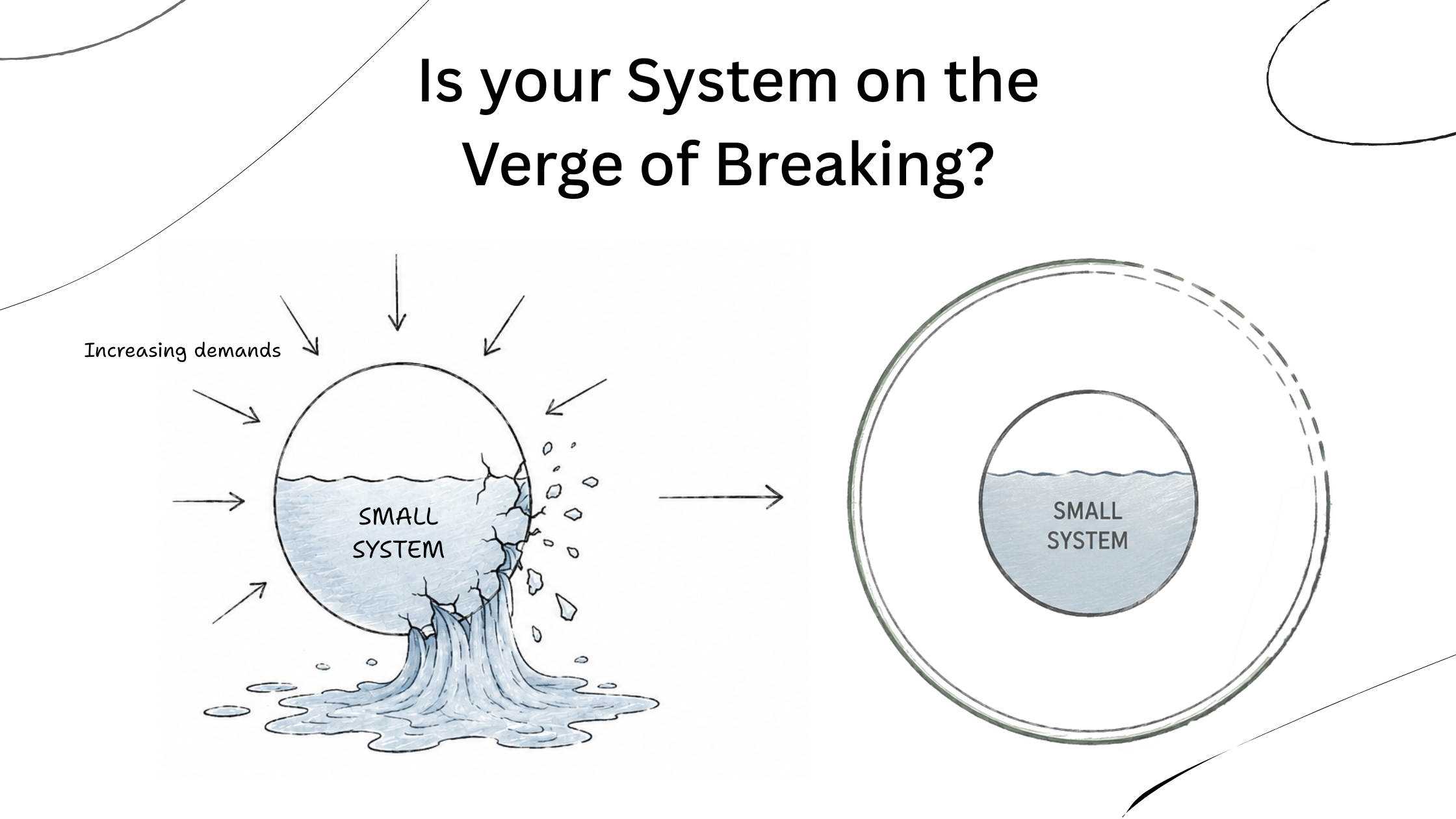
The default approach produces a flat pipeline: one input, one large model, one output, repeat. No routing. No complexity awareness. Every task treated identically regardless of what it needs. In a proof of concept this works fine. At scale, the cost problem stops being abstract - and by then the architecture is already too embedded to change easily.

The pilot looks fine. Production is where things start to break and that's the trap most scaling teams walk into.
What Is Model Routing in AI and Why Does It Matter?
Model routing is the orchestration layer that decides which AI model handles which task - sending complex, ambiguous requests to large frontier models and simple, repetitive ones to smaller, faster, cheaper models. Without it, every task gets routed to the same model regardless of what it actually needs: you pay frontier-model prices for work a fraction of the cost could handle equally well.
At scale, that is not an efficiency gap but a margin problem. Model routing is what closes it - matching compute to complexity the same way a hospital matches patient complexity to the right tier of care rather than routing every case to the senior specialist.
What the fix actually looks like
Think of it like triage in a hospital. You don't route every patient with a minor injury to your most senior specialist. You have a system that matches people to the right level of care - reserving specialist time for cases where their expertise is genuinely irreplaceable. Your large model's compute is the specialist's time. The orchestration layer is the triage system. Without it, you have queues, waste, and costs that don't hold at scale

“The key isn’t just about choosing the cheapest option, but about finding the right recipe of tools and services that aligns with your workload patterns.”
- Google Cloud
How to Design Efficient AI Agent Architectures for Enterprises
Efficient enterprise AI agent architecture is built in tiers. A classification layer assesses task complexity and routes it to the appropriate model: a lightweight model handles narrow, high-volume tasks; a mid-tier model handles moderate reasoning; a frontier model is reserved for genuinely complex or high-stakes cases.
Each tier has defined cost, latency, and quality thresholds. On top of this sits an observability layer - tracking which tasks are going where, at what cost, with what outcomes - so routing decisions can be continuously calibrated rather than set once and forgotten.
The organisations that reduce AI agent orchestration costs at scale are not running better models. They are running better systems around models, with architecture that matches spend to need at every step.
Why most teams haven't built this yet
There are really two reasons and neither has anything to do with a lack of skill.
First: the early pain isn't visible. When you're running a proof of concept, the cost difference between a large model and a small one feels abstract. It only becomes obvious at scale - when the budget impact is undeniable and the system is already too embedded to change easily.
Second: tiered orchestration is genuinely harder to build. A single model pointed at a task is simple. An orchestration layer that correctly classifies tasks, routes them, handles edge cases, and maintains consistency across multiple models is a serious systems problem - the kind that takes six to eighteen months to build properly.

The agent reality check
Let's be direct: the hype cycle has significantly outpaced the deployment reality. Most of what organizations have built and called "agents" are, on close inspection, sophisticated chatbots with tool access bolted on. They fail in three specific, predictable ways - and all three are architectural, not model quality, problems.
This is precisely why now is the right moment to pivot. The infrastructure - Kubernetes, LangGraph, sandboxed execution environments, proper observability tooling - exists and is maturing. Companies that start building now will be early-to-mid players, not laggards doing emergency re-architecture two years from now.

NVIDIA defines agentic systems as "autonomous, long-running agents that reason, plan and act across complex, multi-step workflows" - a definition that highlights how far most current implementations still have to go. This isn't a reason to pull back but rather a signal to treat this like a real systems problem.
What you should actually be tracking
Tracking the right metrics requires an AI oversight framework that connects routing decisions to business outcomes, not just benchmark scores.
Most AI business cases get approved on model performance benchmarks - which is the wrong number to optimize for. The real cost - container orchestration, workflow state management, sandboxed execution, observability tooling, routing model maintenance - rarely makes it into the same deck. So the ROI gap isn't surprising. The real cost was never fully accounted for in the first place.

McKinsey estimates generative AI could add $2.6T–$4.4T annually to the global economy, with total productivity impact reaching $7.9T. The cost of getting system design wrong will scale right alongside the opportunity - not independently of it.
Conclusion: Three verdicts, one principle
1 - Single-model stacks are not production architectures.
Routing every task to the same frontier model has no cost-efficiency mechanism, no complexity awareness, and no path to economic viability at scale. Without an AI oversight framework to govern routing decisions, better models only delay the budget problem. They don't solve it.
2 - Routing is required and it can't be an afterthought.
Bolted on after the fact, tiered orchestration requires re-architecting systems already embedded in production. The organizations building it now are the ones who won't be explaining budget overruns to their CFO eighteen months from now.
3 - The infrastructure is where the advantage actually sits.
Kubernetes, LangGraph, sandboxed execution, observability tooling, feedback-integrated recalibration - these aren't operational add-ons. The organizations with structural AI advantages aren't running the most powerful models. They're the ones who figured out that the game is about using the right model for each task - and built the systems to make that happen.
"Enterprises that build intelligent orchestration into their AI systems early will run dramatically more automations per dollar of cloud spend. The competitive advantage in agentic AI is not a better model. It is a better system."
That's not an AI strategy. It's a systems design strategy, applied to AI. And that distinction is where most of the real value is going to be created.
Everything else works right up until it hits a budget ceiling.