
Human in the Loop AI as a Production Requirement: A Guide to Control Architecture for Enterprise Success
Human in the Loop AI as a Production Requirement: A Guide to Control Architecture for Enterprise Success
Updated On:
August 25, 2026

88% of enterprises are running AI. Only 4% are generating meaningful returns. The gap isn't the model, it's everything built around it.
Let's start with a number that should make every executive uncomfortable.
95% of enterprise AI pilots deliver zero measurable ROI. Not low ROI. Not disappointing ROI. Zero.
- McKinsey Global AI Survey, 2025
Read that again. Not in small companies with weak data or no budget. Across the enterprise. Across industries. After years of investment, board-level attention, and consultant fees that could fund a mid-size product studio.
And yet the conversation in most boardrooms and strategy decks stays exactly where it's been for three years: better models, faster inference, which LLM to pick, whether to build or buy. Surface-level. Symptom-chasing. Completely missing the structural problem underneath.
Here's what's interesting: the companies generating returns aren't running better models. They're running better systems, systems where human in the loop AI isn't an afterthought but the architecture itself. That distinction is everything, and most organizations are still missing it entirely.
The adoption numbers tell a story nobody wants to read

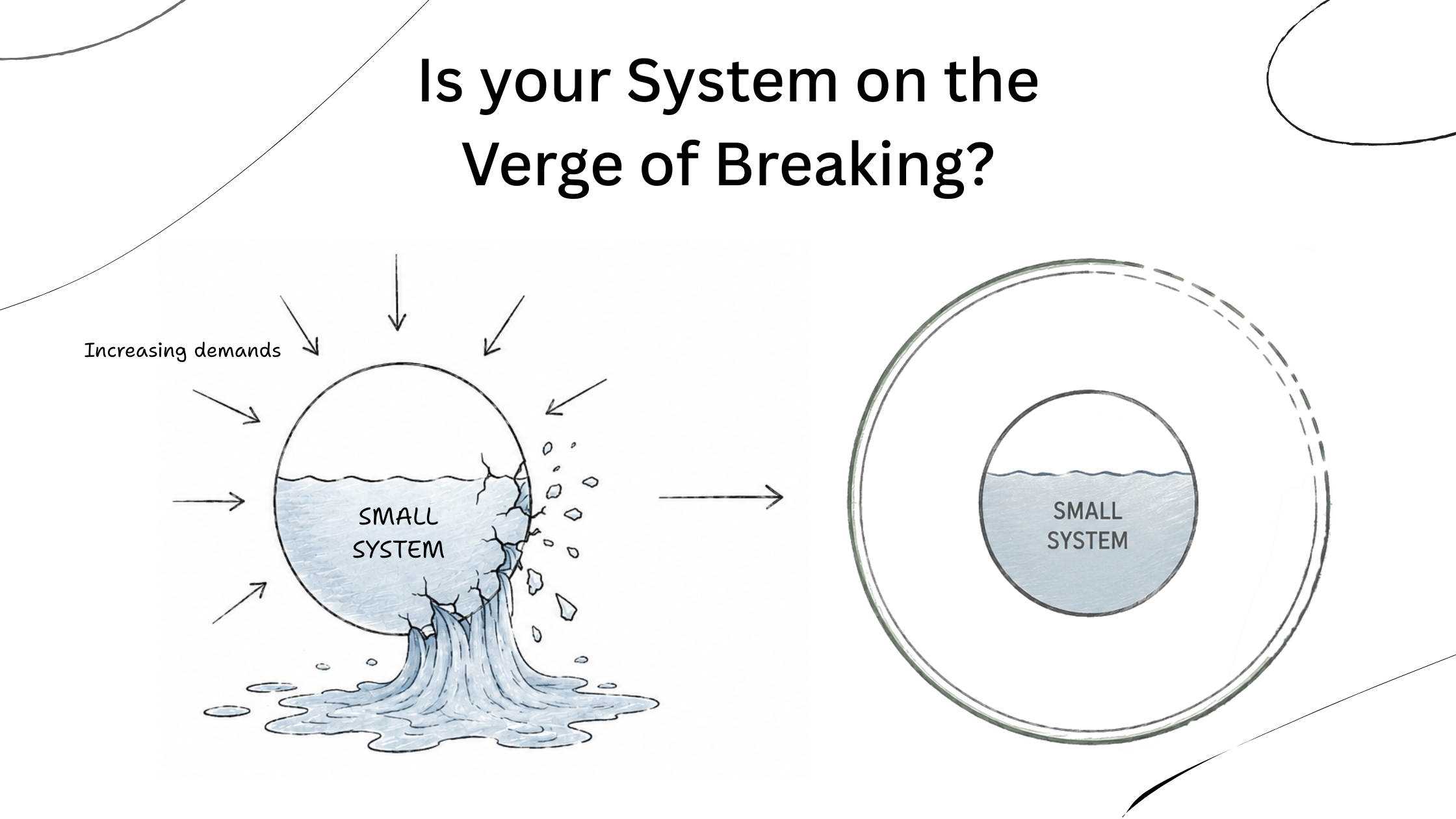
The gap between 88% and 4% isn't a model quality problem. The models are good. GPT-4, Claude, Gemini - these are not the bottleneck. The bottleneck is organizational design: how the AI is deployed, what governs it, and what happens when it gets something wrong.
The dominant failure pattern, documented consistently across McKinsey's 2025 State of AI report and the Partnership on AI's Enterprise Landscape research, is this: organizations insert AI into existing workflows without redesigning those workflows first. AI then inherits broken processes and accelerates them. Garbage in, faster garbage out.
Key Insight
55% of high-performing AI organizations redesign workflows around AI before deploying. Among the broader population, that figure is 20%. The 35-point gap in process redesign explains most of the performance differential in the field.
Why Do Most Enterprise AI Projects Fail to Generate ROI?
The ROI gap is rarely a model problem, projects fail because investment is undercounted from the start, with budgets covering model procurement and pilots but not data infrastructure, change management, and monitoring capability needed to deliver value.
A model performing at 94% accuracy in a sandbox, when embedded in a broken workflow, accelerates bad outcomes. The 95% zero-ROI figure is a system design failure driven by business cases optimising the wrong numbers, not a technology failure.
The architecture is the problem, not the algorithm
To understand the fix, you need to understand the failure. And the failure is architectural, not algorithmic.
AI models are probabilistic systems. They output confidence scores that measure certainty, not correctness. A model can be 94% confident and completely wrong - not because it's a bad model but because the input falls outside its training distribution. And here's the critical part: the model has no mechanism to know this.
The error propagates downstream, silently, until something breaks visibly.
In enterprise environments, this gets worse because of three things that don't exist in a controlled pilot: data that changes constantly, decisions that can't be reversed, and legacy infrastructure that was never designed for AI.

The standard autonomous architecture is:
Input → Model → Output → Action.
No monitoring. No feedback. No correction layer.
In a controlled pilot, this works fine. In live production with financial and legal consequences, it fails - not immediately, but inevitably. 64% of organizations stall at the scaling stage because of infrastructure debt that a clean pilot environment never exposed.
The pilot succeeded. The production environment is not the pilot.
Why AI models fail in production but work in pilots is architectural, not algorithmic: pilots run on clean data at manageable volume; production brings data drift, irreversible decisions, and legacy infrastructure the model was never trained to handle.
What Is Human-in-the-Loop in AI and Human-in-the-Loop Machine Learning: Why Neither Is Enough?
Human-in-the-loop (HITL) places a human reviewer between an AI's output and the action it triggers, creating an intervention point and meeting regulatory mandates like EU AI Act Article 14.
It is structurally necessary, but at production scale it fails in three ways: automation bias (reviewers confirm outputs), volume collapse (queues outpace human attention), and lost feedback loops (override signals aren't used for model recalibration).
HITL ensures compliance; it does not make the system improve. The same limitations apply in human in the loop machine learning pipelines, where review layers slow iteration without guaranteeing better outcomes.
Human-in-the-loop was a patch, not a solution
The reflex response to all of this is human review. Add a person between the model output and the action. Audit trail exists. Compliance box ticked. Problem solved.
It's not wrong - Human-in-the-Loop (HITL) is structurally necessary. AI cannot audit its own outputs. EU AI Act Article 14 mandates human oversight for high-risk AI in employment, credit, healthcare, and critical infrastructure for exactly this reason. But HITL as currently implemented is failing in three specific, predictable ways at scale.

Failure 1 - Automation bias
Review interfaces present cases structured around the model's interpretation - reviewers are evaluating a pre-framed answer, not the situation itself. Research is consistent: humans default to confirming AI outputs rather than questioning their premise. HITL looks like independent oversight. Functionally, it's a rubber stamp at velocity.
Failure 2 - Volume collapse
Human attention doesn't scale with decision throughput. As queues grow, reviewers apply faster heuristics to clear them - effectively re-automating the decisions HITL was supposed to oversee. No amount of reviewer training changes this. It's an architectural constraint, not a personnel problem.
Failure 3 - The feedback loop nobody owns
A consistent 30% override rate on a specific case type means the model is wrong in that domain with high regularity. The correct response is structural: recalibrate the threshold, retrain the model, redesign the rule. The observed response, almost universally, is to absorb the overhead and move on. Nobody owns the accountability for acting on override signals. The feedback loop exists in the architecture, it just doesn't operate in practice.
"The conditions required for meaningful human review - sufficient expertise, adequate time, genuine intervention authority, and feedback integration - are rarely present at production scale."
What a closed-loop control system actually looks like
The closed-loop architecture described here is, in practice, what a functioning AI oversight framework looks like at production scale.
The organizations generating real AI returns have built something structurally different. Whether they've named it this way or not, they've built closed-loop control systems - architectures where uncertainty is managed rather than ignored, and where the system improves continuously from its own operational data.
Enterprise AI: Closed-Loop Control Architecture
1. Input & confidence scoring
Raw data enters. Model produces output and a calibrated confidence score. Uncertainty is highest here - the system acknowledges this rather than suppressing it.
2. Decision routing by confidence + risk tier
High confidence + low risk Auto-execute
Medium confidence or moderate risk Human review
Low confidence or high risk Hold / escalate
3. Bounded, auditable action
Every decision executed with defined ownership. Confidence score, routing decision, and reviewer action all logged - not just the outcome.
4. Outcome tracking + feedback loop
Human corrections flow into retraining pipelines. Override patterns trigger threshold recalibration - not queue management.
5. Drift detection
Performance monitored continuously. Detected degradation triggers automatic adjustment before it causes outcome failure. The loop closes.
This is not a theoretical framework. It's the architecture that every organization generating meaningful AI returns has built, most just haven't named it as a design principle.
Fraud detection: what the two architectures actually produce


Abstract architecture becomes concrete when you trace it through a real use case. Fraud detection is the clearest example because it exposes every failure mode at once.
In the standard pipeline deployment, a transaction is scored. High score triggers auto-block. Low score passes. No monitoring. No outcome tracking. No feedback. Within weeks, two things happen: false positives accumulate silently, and fraudsters adapt to patterns the model wasn't trained on - novel attack vectors get low confidence scores and pass through undetected.
Both failures are architectural. A better model delays them. The same failures recur.
The fraud model didn't get smarter, the system did. The same logic applies to credit decisioning, insurance triage, HR screening - anywhere AI handles high volume with variable exception rates. The domain changes. The control requirements don't.
What Architecture Is Needed to Scale AI in Enterprises
Scaling AI beyond a single use case requires four architectural layers most organisations lack: a shared data and integration platform to avoid rebuilding pipelines, standardised confidence thresholding and routing logic configurable per use case, an MLOps layer with model versioning, drift monitoring, and automated retraining triggers, and an audit and governance layer that logs decisions with full context.
Without these, every AI initiative stays one-off; with them, each deployment compounds the previous investment.
The real cost is never in the deck that gets approved
Most AI business cases get approved on model performance which is the wrong number to optimize for.
So, the ROI gap isn't surprising since the investment was undercounted from the start.
And then there's the people problem. 60% of organizations say AI literacy is their biggest scaling barrier. Which means the humans assigned to oversee AI decisions often can't tell when something has gone wrong. Oversight exists on paper. In practice, it has no teeth.
Three numbers worth tracking instead of accuracy:

How to Manage AI Risk, Confidence, and Human Oversight at Scale
Managing AI risk at scale starts by treating confidence scores as routing signals, not accuracy proxies. A robust AI oversight framework ensures every output carries a calibrated confidence score with defined thresholds for auto-execution, human review, or escalation.
Human oversight is reserved for genuinely ambiguous cases to avoid bandwidth collapse, while override rates by case type are tracked as performance metrics - a 30% override rate signals recalibration, not a staffing issue. Risk, confidence, and oversight only scale when engineered into the architecture, not delegated to reviewer queues,
Conclusions
Three verdicts, one principle
01 — Autonomous AI is not a production architecture.
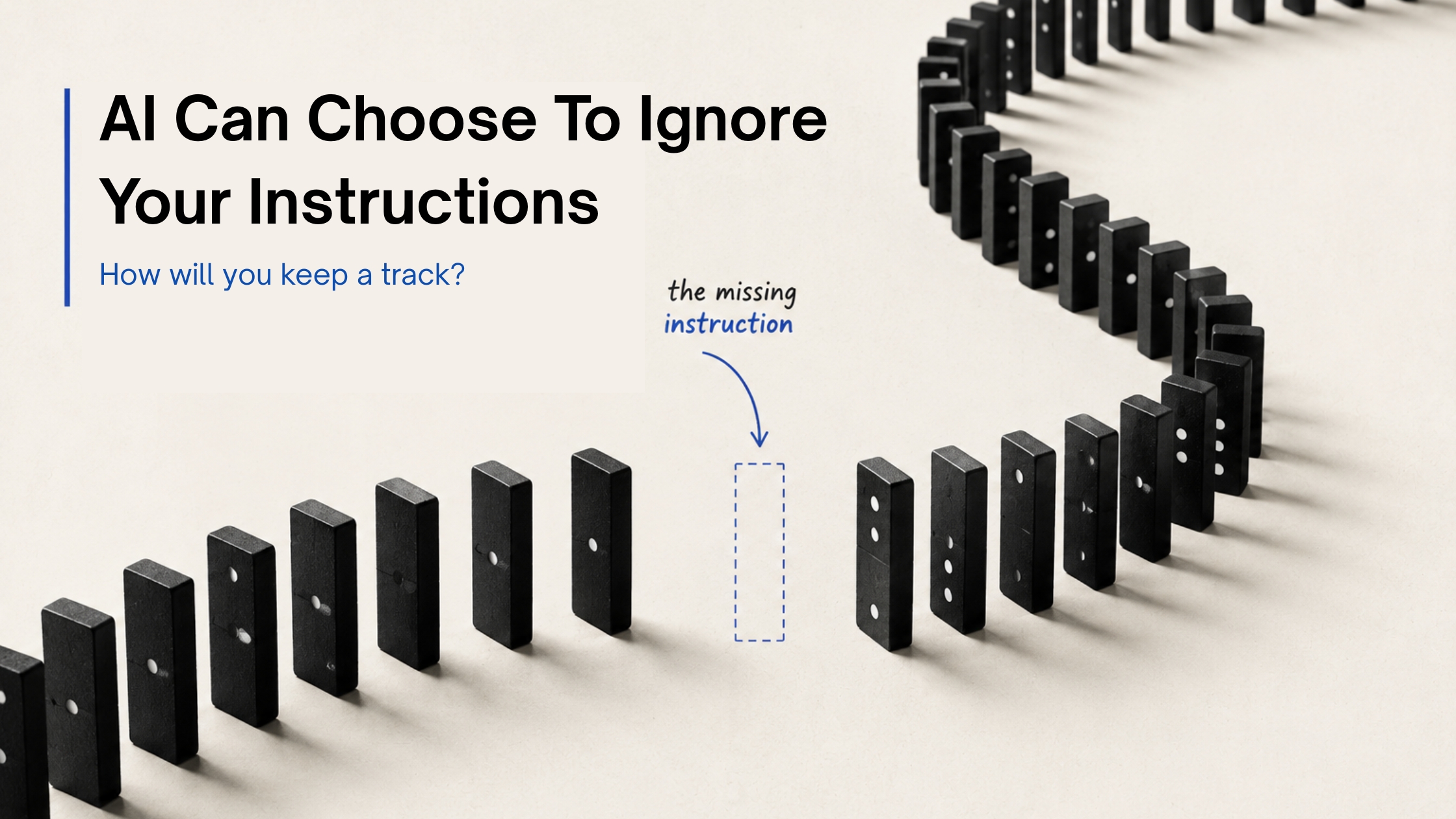
The failure is structural, not algorithmic. A model operating without thresholding, routing, monitoring, and feedback has no mechanism for self-correction. Better models delay the failure. They don't prevent it.
02 — Human-in-the-loop is required, but it can't be the endpoint.
HITL provides accountability and an intervention point before errors propagate. At scale, it fails under automation bias, volume pressure, and the absence of feedback integration. Treating it as a permanent solution builds systems constrained by human bandwidth, not systems that improve.
03 — Closed-loop control is the engineering requirement.
Confidence thresholding, risk-tiered routing, structured escalation, continuous monitoring, feedback-integrated retraining, and drift detection. These are not operational add-ons. They are the product and together they form a functional AI oversight framework that actually scales.

"Enterprises that build closed-loop control systems around AI will outperform those that optimize models in isolation. The competitive advantage in enterprise AI is not a better model. It is a better system."
Every organization that has generated meaningful AI returns has, in practice, built this. Most have not recognized it as the design principle it is. The ones who do are the 4%.
Everything else is a pilot waiting to fail.