
Role Clarity: How to Find the Real Root Cause of Team Underperformance
Updated On:
June 10, 2026

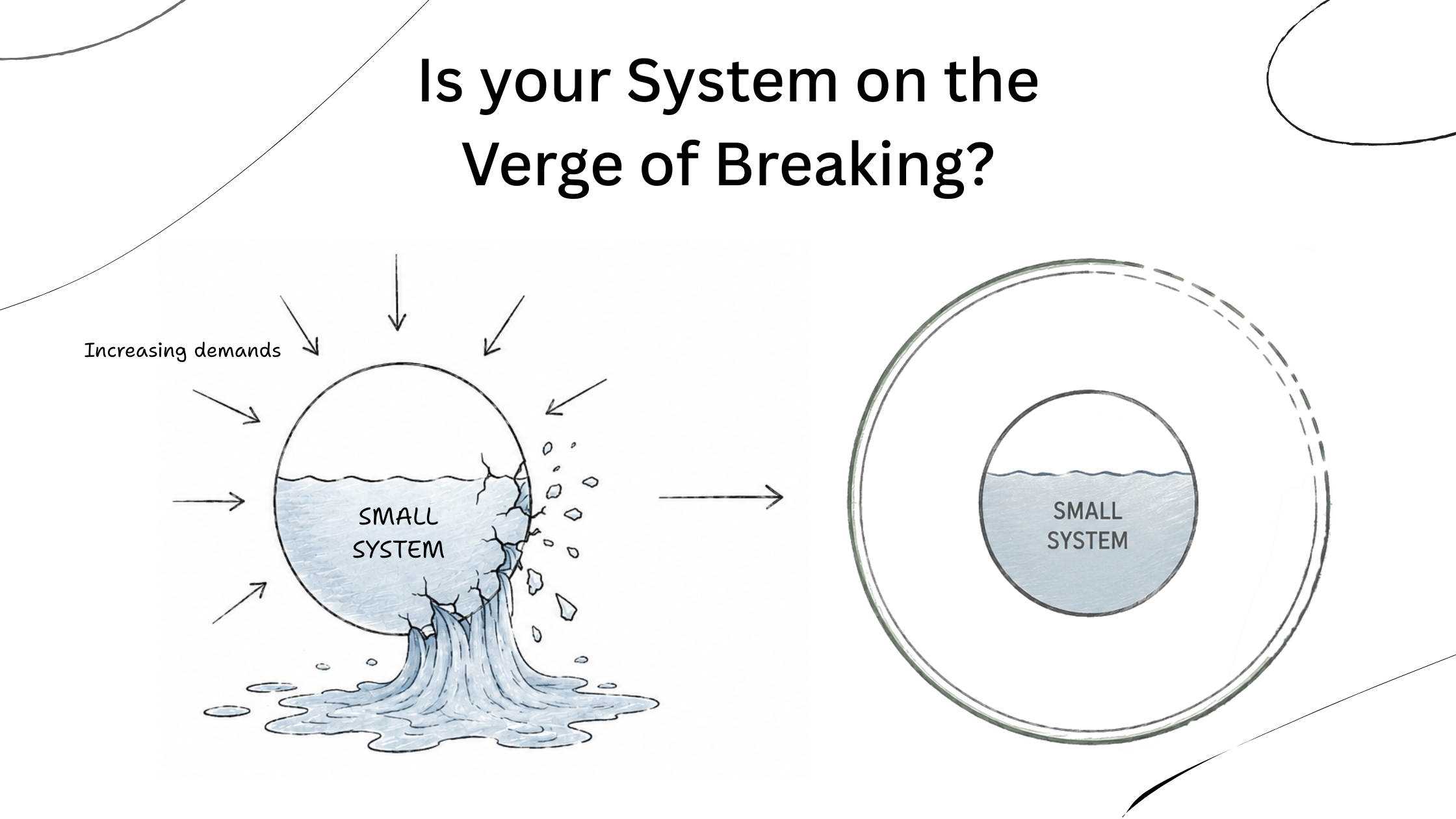
75% of cross-functional teams are considered dysfunctional. Most leaders respond by changing the people. That's the wrong fix. The research is consistent: team failure is almost always a structural problem. Unclear goals, fuzzy ownership, broken decision rights. This article is about diagnosing which layer is actually broken before you touch headcount.
Most Leaders Diagnose the Wrong Problem
When a team starts missing targets, the instinct kicks in fast. Find the weak link. Replace the underperformer. Restructure the reporting lines. It feels decisive. The problem is, it's usually wrong.
Google's Project Aristotle ran 35+ statistical models across hundreds of demographic and performance variables trying to isolate what actually makes teams succeed. The answer wasn't who was on the team. It was how the team operated. Structure before people. System before individual. That distinction matters more than most CXOs realise when they're staring down a team that keeps failing to deliver.
Role clarity sits at the centre of that structural question. And if you don't investigate it before making personnel decisions, you'll almost certainly repeat the same dysfunction with a new cast.
The Cost of Getting the Diagnosis Wrong
Let's be concrete about what's at stake. SHRM estimates that replacing a single employee costs between 50% and 200% of their annual salary once you factor in recruiting, onboarding, lost productivity, and the institutional knowledge that walks out the door with them. Now imagine firing the wrong person. You've just paid a premium to solve nothing.
The wider organisational data is equally sobering. Public companies that excel in decision-making quality saw average EPS growth of 45% year-over-year, while organisations with poor decision-making saw an 88% decline. That gap doesn't come from hiring; it comes from how leaders structure and operate their teams.
Poor diagnosis cascades. Good employees quit. McKinsey's State of Organizations 2023 report found that 39% of employees across seven countries planned to leave their jobs within 3 to 6 months and employees facing wellbeing and mental health challenges, often triggered by unclear environments, were 4x more likely to want out. Your best people don't wait around while leadership figures it out.
Why Role Clarity Is the First Variable to Audit
Ambiguity is expensive. When two team members both believe they own a decision, one of three things happens: they collide, one defers (and resents it), or nobody acts and the decision stalls. None of those outcomes show up on a performance review as "structural failure." They show up as "interpersonal conflict" or "slow execution" and that's exactly where leaders misread them.
Research published in Behavioral Sciences (n=352) found that role clarity demonstrated a strong, measurable relationship with proactive employee behaviour and overall workplace effectiveness. The mechanism isn't mysterious: when people know what they own, they move. When they don't, they hedge.
Improving role clarity in teams isn't about writing better job descriptions. It's about answering three questions your team should never have to guess at:
1. Who owns this decision and who merely gets consulted?
2. What does success look like for this person specifically, not the team abstractly?
3. When priorities conflict, who breaks the tie?
If those answers aren't obvious to everyone on the team, you have a structural problem. Not a people problem.
The Waterline Model: A Diagnostic Framework for Dysfunctional Teams
Used by operators at companies like Google, Stripe, and Anthropic, the Waterline Model offers a structured way to debug a dysfunctional team before touching headcount. Think of it as a decision tree for organisational root-cause analysis. You work from the top down, ruling out each layer before diving into the next.
The counterintuitive principle at its core: individual performance is the last thing you investigate, not the first.
Layer 1: Structure (Start Here, Always)
Before anything else, audit the environment the team is working inside. Are goals specific and measurable, or vague enough that two people on the same team could describe them differently? Is role clarity present, or do ownership boundaries blur under pressure? Are decision rights documented, or does every non-trivial call require a meeting?
This is where most dysfunctional teams actually break. Deloitte found that companies with high organisational design maturity are 3x more likely to develop disruptive products and 1.9x more likely to achieve high customer satisfaction compared to peers, not because they hired differently, but because they structured differently.
If structure is broken, fix it here. Don't proceed.
Layer 2: Team Dynamics
Structure is clean but the team still can't execute? Now look at how decisions actually get made in practice versus on paper. Are priorities shifting too frequently for anyone to build momentum? Does every action require sign-off from someone two layers up? Is there enough psychological safety for people to flag problems before they compound?
Slow teams are often slow because approval chains have become load-bearing walls nobody dares remove. That's a dynamics problem, not a talent problem.
Layer 3: Interpersonal
If structure and dynamics are functional, look at the relationships. A trust breakdown between two senior stakeholders can grind an entire function to a halt, even when everyone is nominally aligned on goals. Unresolved conflict tends to go underground rather than surface, which means the symptom you see (missed deadlines, passive resistance, poor collaboration) is rarely the actual conflict.
Don't skip this layer. It's underdiagnosed precisely because it's uncomfortable to name.
Layer 4: Individual Performance (Last)
Only after ruling out the three layers above should you ask whether this is genuinely a performance issue tied to one person. Sometimes it is. Someone unable or unwilling to perform does exist. But you've now earned the confidence to make that call, because you've verified the system around them is actually functional.
Without that verification, you're guessing. And guessing at this layer costs what SHRM measured: 50 to 200% of salary, every time you get it wrong.
The Snorkel Principle: Don't Scuba When You Can Wade
There's a phrase that captures the right sequencing: snorkel before you scuba. Start at the surface. Only go deeper when the surface is clear.
Leaders who skip this sequence, jumping straight to interpersonal diagnosis or individual performance reviews, routinely waste months on intervention that doesn't address the root cause. Worse, they damage the trust of people who were performing fine inside a broken system and get caught in the crossfire.
The leadership decision-making framework here isn't complex. It's sequential. Work top-down through the four layers. Confirm or rule out each before moving to the next. That discipline alone separates leaders who fix problems from leaders who rotate them.
Consider a real scenario: a 20-person product team misses three consecutive quarterly targets. Leadership attributes it to the VP of Product and begins a transition plan. Six months later, the new VP misses the same targets. Why? Because nobody audited the fact that engineering and product had overlapping ownership of roadmap decisions, creating a structural deadlock that no individual VP could resolve unilaterally. That's a role clarity failure. It was never a people failure.
What Happens When Leaders Skip the Diagnosis
The costs aren't hypothetical. Research from McKinsey's State of Organizations report found only 25% of employees believe their leaders are genuinely engaged and capable of inspiring effective performance. That perception gap doesn't come from nowhere. It builds, incrementally, every time a leader makes a structural decision without structural evidence.
The organisational consequences stack quickly: unnecessary hiring spend, attrition of high performers who recognise a broken system and leave, erosion of leadership credibility, and slower execution as the same dysfunction resurfaces in a slightly different configuration. And critically, research in organisational psychology confirms that high-performance work practices, including clear structures and role definition, significantly improve both employee engagement and organisational identification. Neglect the structure, and engagement follows it down.
A telling benchmark: 75% of cross-functional teams are considered dysfunctional. That's not a talent crisis. That's a design crisis.
Frequently Asked Questions
How do you improve role clarity in teams without a full restructure?
Start with a RACI audit for the top 10 decisions your team makes every quarter. Document who owns each one, who is consulted, and who is simply informed. Surface every gap wherever two people both believe they own the same call. That exercise alone surfaces most clarity failures without requiring org chart changes.
How do you debug a dysfunctional team without damaging morale?
Frame the diagnosis as a systems audit, not a performance review. When leaders signal that they're looking for structural problems first, teams respond with candour rather than defensiveness. The Waterline Model is particularly useful here because it visibly deprioritises individual blame until structural causes have been ruled out.
Why do high-performing teams fail despite having talented people?
Talent doesn't operate in a vacuum. Even strong performers will underdeliver inside a system with unclear decision rights, shifting priorities, or broken trust between key stakeholders. Talent is a necessary condition for team success, not a sufficient one. The environment the talent operates in matters just as much.
What does a leadership decision-making framework for team performance look like in practice?
The Waterline Model is one practical version: audit structure before team dynamics, team dynamics before interpersonal relationships, and interpersonal issues before individual performance. Run this sequence every time before making a people-related decision. Treat it like a pre-flight checklist, non-negotiable, not optional.
What are the most effective organisational leadership strategies for improving team effectiveness?
The evidence points consistently toward three levers: structural clarity (role ownership, decision rights, goal specificity), psychological safety (which Google's Project Aristotle identified as the single largest predictor of team effectiveness), and leadership decision-making quality. Companies that improve all three outperform peers on EPS growth, customer satisfaction, and product innovation simultaneously.
Debug the System Before You Debug the People
The best leaders don't instinctively reach for personnel changes when a team starts failing. They reach for a diagnostic. They ask what the team is operating inside before asking who is operating poorly inside it. That shift, from person-first to system-first, is one of the defining habits separating leaders who genuinely improve organisations from those who simply rotate dysfunction.
Before your next restructure, your next leadership change, or your next performance conversation, run the Waterline Model. Audit structure, then dynamics, then relationships, then individual performance. If you find the root cause in layer one, and you will more often than not, you'll have saved yourself an expensive misdiagnosis and kept the people worth keeping.
If you're working through how to apply this kind of organisational thinking inside your own business, Linksoft works with leadership teams to design the structures, systems, and decision-making frameworks that actually hold. Start there.